

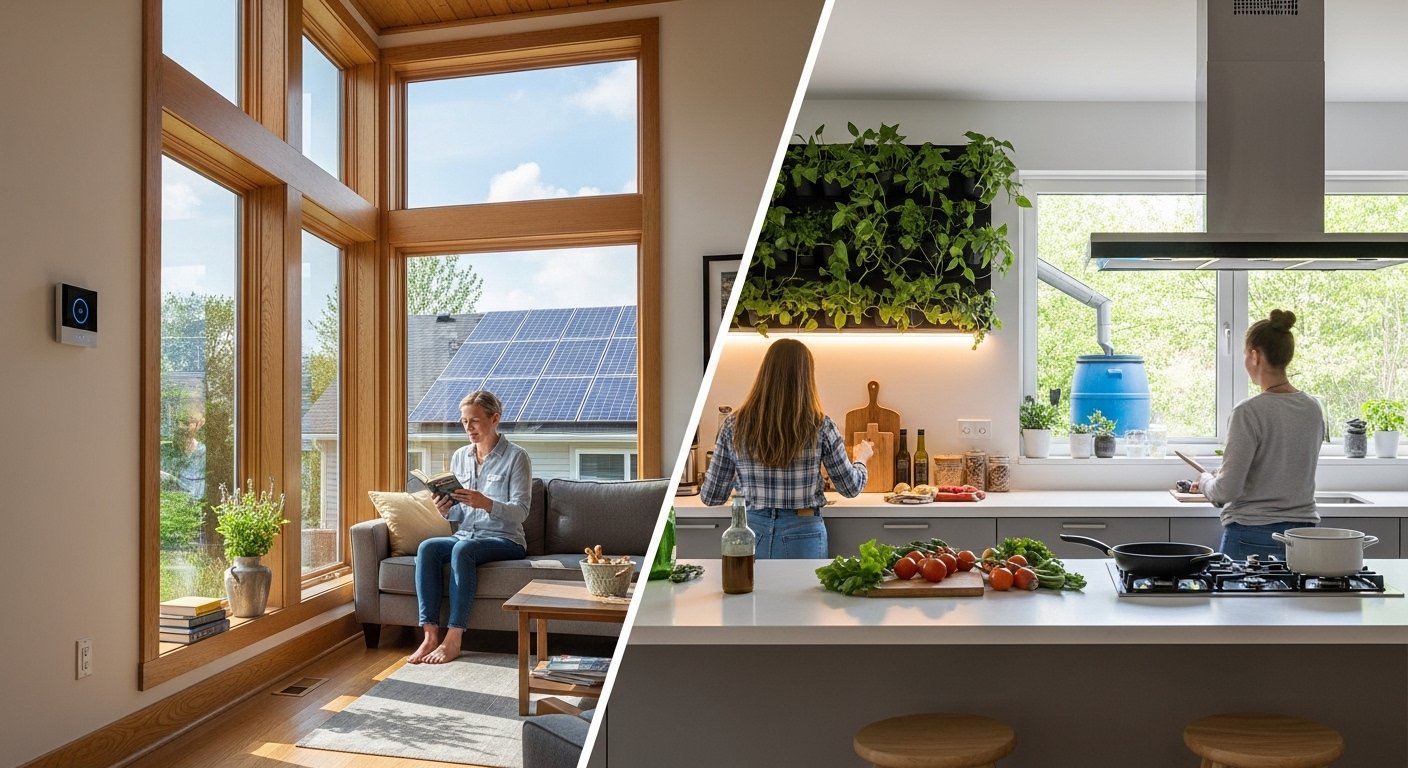
I visited a founder friend after he renovated his decades old house, the change was not just visual. The space felt quieter, cooler, and somehow calmer. Sunlight moved differently through the rooms, the air felt cleaner, and his energy bills had dropped enough to become a casual talking point over coffee. That experience captures why home improvement has shifted from being a cosmetic exercise to a strategic one. For entrepreneurs, tech leaders, and forward thinking homeowners, improving a home today is as much about efficiency and resilience as it is about style.
Home improvement now sits at the intersection of sustainability, technology, and long term value creation. As energy costs rise and environmental awareness grows, the smartest upgrades focus on how homes consume power, manage resources, and support healthier living. What follows is not a checklist, but a deeper look at how energy efficient choices reshape modern living and why they matter beyond the walls of a single house.
Why Sustainable Home Improvement Has Become a Strategic Choice
For years, sustainability in housing was framed as an ethical preference. Today, it is a financial and operational decision. Energy efficient homes cost less to run, age better, and appeal to a growing market of conscious buyers. For entrepreneurs who think in terms of return on investment, sustainable home improvement mirrors the logic of smart business operations. You reduce waste, optimize systems, and build something that performs better over time.
There is also a psychological element. A well designed, energy efficient home supports focus, rest, and productivity. Natural light, stable indoor temperatures, and cleaner air have measurable effects on well being. In a world where work and life increasingly overlap, the home has become a performance environment. Improving it sustainably is not indulgence, it is infrastructure.
Energy Efficiency Starts with How a Home Is Built and Sealed
Before adding smart gadgets or solar panels, the most effective home improvement often happens behind the walls. Insulation, air sealing, and building materials determine how much energy a home loses every day. Older homes, in particular, leak energy through poorly insulated roofs, gaps around windows, and outdated construction methods.
Upgrading insulation in attics and walls stabilizes indoor temperatures and reduces reliance on heating and cooling systems. High performance windows, especially double or triple glazed options, prevent heat loss while allowing natural light to do its work. These improvements rarely make headlines, but they deliver consistent savings year after year.
Material choice also matters. Sustainable home improvement favors materials that are durable, low impact, and responsibly sourced. Reclaimed wood, recycled steel, and low emission paints reduce environmental harm while adding character and longevity to a space. These choices reflect a mindset shift from short term aesthetics to long term performance.
Smart Technology as the Nervous System of the Modern Home
Once the physical structure is efficient, technology becomes the control layer. Smart thermostats, lighting systems, and energy monitors allow homeowners to see and manage how energy is used in real time. This is where home improvement starts to feel familiar to tech professionals. Data drives better decisions.
A smart thermostat learns daily patterns and adjusts temperatures automatically, reducing waste without sacrificing comfort. Intelligent lighting systems respond to occupancy and daylight, cutting unnecessary usage. Energy dashboards translate consumption into clear insights, turning abstract kilowatt hours into actionable information.
What makes these systems powerful is integration. When heating, lighting, and appliances communicate, the home behaves like a well designed platform rather than a collection of independent parts. Sustainable home improvement increasingly depends on this systems thinking approach.
Renewable Energy and the Shift Toward Self Reliance
For many homeowners, the most visible symbol of energy efficient living is renewable energy. Solar panels, once considered niche, are now a mainstream component of modern home improvement. Advances in efficiency and declining costs have changed the equation, making solar a practical option in many regions.
Adding solar power reduces dependence on external energy sources and stabilizes long term costs. When paired with home battery storage, it also provides resilience during outages. This idea of energy independence resonates strongly with founders and innovators who value control and risk mitigation.
Other renewable options, such as solar water heating or small scale wind solutions, can complement a broader strategy depending on location. The key is alignment. Sustainable home improvement works best when renewable systems are designed to match actual consumption patterns rather than overbuilt for appearance.
Water Efficiency as an Overlooked Opportunity
Energy efficiency often dominates the conversation, but water use is just as critical. Modern home improvement increasingly treats water as a managed resource rather than an unlimited utility. Low flow fixtures, efficient appliances, and smart irrigation systems dramatically reduce consumption without affecting daily comfort.
Rainwater harvesting and greywater reuse systems take this further by closing the loop. These solutions are particularly relevant in regions facing water stress, but they also signal a broader design philosophy. A sustainable home considers every input and output, minimizing waste wherever possible.
Comparing High Impact Home Improvement Upgrades
To understand where sustainable home improvement delivers the most value, it helps to compare common upgrades in terms of cost, impact, and longevity.
| Home Improvement Upgrade | Primary Benefit | Typical Impact Timeline |
|---|---|---|
| Improved insulation | Reduced energy loss | Immediate and long term |
| Smart thermostat | Optimized heating and cooling | Short term savings |
| Solar panels | Renewable energy generation | Long term return |
| High efficiency windows | Thermal comfort and noise reduction | Medium to long term |
| Water efficient fixtures | Lower water and energy use | Immediate |
This comparison highlights an important truth. The most effective strategies combine quick wins with foundational upgrades that compound over time.
The Role of Design in Sustainable Living
Sustainability is not just technical. Design plays a central role in how energy efficient a home feels and functions. Passive design principles, such as orienting rooms to maximize daylight or using shading to control heat gain, reduce the need for mechanical systems.
Open layouts that encourage airflow, thoughtful placement of windows, and the use of natural materials all contribute to a sense of balance. These choices make sustainable home improvement feel intentional rather than utilitarian. The result is a home that supports both environmental goals and human experience.
For business leaders accustomed to designing products and platforms, this design led approach will feel intuitive. The best solutions are elegant, not excessive.
Economic and Market Implications of Sustainable Home Improvement
Beyond personal benefits, sustainable upgrades influence property value and market perception. Energy efficient homes often sell faster and command higher prices, especially as buyers become more informed. Certifications and documented improvements signal quality and foresight.
There is also a policy dimension. Many regions offer incentives, tax credits, or financing options for energy efficient home improvement. While these programs vary, they reflect a broader economic shift toward sustainability. Homeowners who act early often benefit the most.
From a strategic perspective, investing in efficiency hedges against future regulation and rising utility costs. It is a form of future proofing that aligns personal assets with global trends.
Cultural Shifts and the Meaning of Home
At a deeper level, the rise of sustainable home improvement reflects a changing relationship with space. Homes are no longer static shelters. They are adaptive environments that respond to how people live and work. Energy efficiency becomes part of a larger narrative about responsibility, independence, and quality of life.
For entrepreneurs and tech readers, this mirrors changes in how companies operate. Lean systems, renewable inputs, and long term thinking are no longer optional. They are competitive advantages. The home, in this sense, becomes a personal expression of the same values that drive modern business.
Conclusion
Sustainable home improvement is not a trend driven by aesthetics or guilt. It is a thoughtful response to economic reality, environmental limits, and evolving lifestyles. By focusing on energy efficiency, smart systems, and responsible design, homeowners create spaces that perform better on every level.
The most compelling part of this shift is its permanence. Unlike surface level renovations, these improvements continue to deliver value quietly, day after day. In a world obsessed with speed and scale, sustainable home improvement stands out as a patient investment. It rewards those who think long term and build with intention.
 Oscar James