

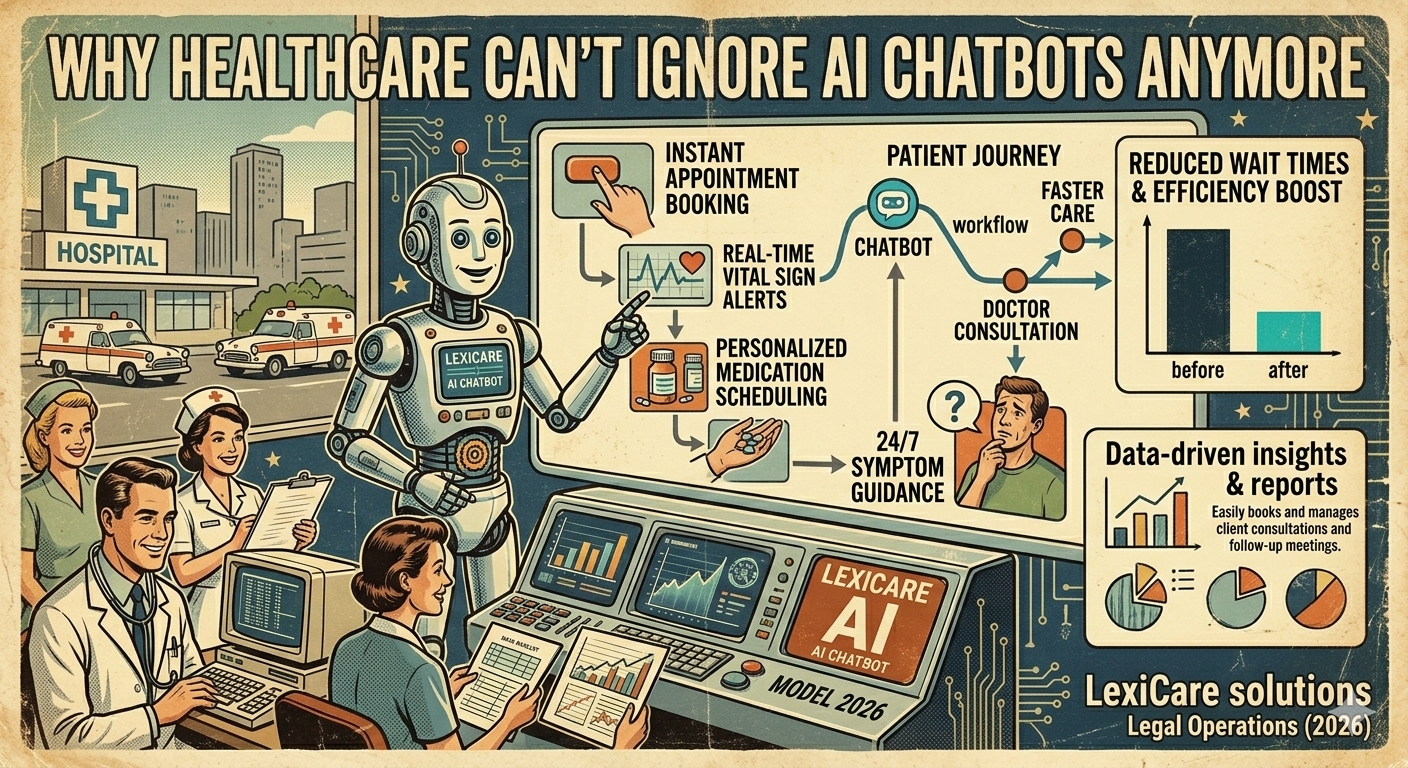
Healthcare is under pressure. Patients want fast answers. Doctors are overbooked. Front desk teams are stretched thin. Phones ring all day. Emails pile up. Messages wait for replies.
At the same time, patients expect the same speed they get from banks, airlines, and online shopping. They do not want to wait three days to confirm an appointment. They do not want to sit on hold for twenty minutes just to ask a simple question. This is where the AI healthcare chatbot steps in as a working tool that takes pressure off the system and gives patients faster access to support.
Let’s break down why this matters, and what it looks like in real hospitals and clinics today.
The Reality Inside Modern Clinics
Walk into any busy clinic, and you will see the same pattern.
- The phone keeps ringing.
- Patients ask about reports.
- Someone wants to reschedule.
- Another person forgot their prescription details.
- A new patient needs directions and insurance info.
Most of these questions are simple. But they still take time. Now imagine if 60 to 70 percent of those routine queries could be handled instantly. That is what chatbots in healthcare are designed to do.
It answers common questions, helps patients book visits, and sends reminders. It even collects basic information before the doctor sees the patient. Instead of replacing staff, it clears their desk.
What an AI Healthcare Chatbot Actually Does
There is still confusion about what these tools are. It is not a robot giving medical diagnoses. It is a digital assistant built for healthcare settings. It follows strict rules. It works with secure systems. It supports staff and patients.
A Day in the Life: Before and After Chatbots
Let’s look at a simple example.
Before
- A clinic receives 300 calls a day.
- Front desk staff answer the same ten questions repeatedly.
- Doctors get interrupted for non-urgent queries.
- Patients wait on hold.
After
- A chatbot in healthcare handles routine appointment bookings online.
- Patients confirm visits through a simple message.
- Reminders go out automatically.
- Basic triage questions are collected before arrival.
Now the staff focuses on serious patient needs. Doctors spend more time on care. Patients get faster responses. The workload does not vanish. It becomes manageable.
What Are the Key Benefits of Using AI Chatbots in Healthcare?
This is the question leaders are asking.
- Faster response times: Patients do not wait for office hours. A chatbot works 24 hours a day. It answers instantly.
- Lower administrative load: Routine work moves away from staff desks. That reduces burnout and errors.
- Better patient experience: When answers come quickly, patients feel heard. That improves satisfaction scores.
- Improved data collection: Structured intake forms ensure doctors receive clear information before visits.
- Fewer missed appointments: Automated reminders reduce no-shows. That protects revenue.
The Role of Chatbots in Healthcare Systems
Healthcare systems are handling more patient demand without matching growth in staff or budget. Most of that pressure appears in communication.
They typically support systems by:
- Acting as a Patient enquiry chatbot that answers routine questions instantly
- Routing complex cases to the correct department
- Operating across websites, portals, and messaging platforms
- Reducing call volume before it reaches the front desk staff
This filtering prevents operational congestion and improves response time without increasing headcount.
AI Chatbot for Clinics: A Practical Use Case
Smaller clinics feel the strain more sharply because resources are limited. It can take over high-frequency administrative tasks such as:
- Booking and rescheduling appointments
- Sending automated visit reminders
- Collecting basic symptom details before consultations
- Answering common insurance and billing queries
Medical Appointment Chatbot: Fixing a Pain Point Everyone Knows
Appointment management is not a minor inconvenience. It quietly disrupts the entire system. Missed visits create empty slots that cannot always be refilled. Late arrivals delay other patients. Last-minute cancellations throw off planning. Staff spend hours every week calling, confirming, and rescheduling instead of helping patients in the clinic.
This is where a chatbot for medical appointments makes a measurable difference. It restructures how appointments are handled from the first interaction to final confirmation. Instead of relying on phone calls and manual reminders, the process becomes simple and predictable.
Patients can:
- Book appointments instantly without waiting on hold
- Reschedule visits at any time without calling the clinic
- Receive automated reminders before their visit
- Confirm attendance with a quick reply
When these actions move to a digital system, the impact becomes visible. Fewer appointment gaps mean more consistent daily schedules. Doctors are not left waiting for no-shows. Front desk teams are not overwhelmed with repetitive calls. The clinic runs closer to plan.
The change may seem small at first glance, but in practice, it reshapes daily operations. Better scheduling flow leads to steadier revenue and a smoother patient experience. Over time, that consistency compounds into real operational stability.
The Human Concern: Will Chatbots Replace the Doctors and Staff?
This fear always comes up. The answer is simple. No. A chatbot for healthcare does not examine patients. It does not prescribe medication. It does not make final decisions. It supports communication.
Think of it like a smart assistant at the front desk. It gathers information, answers routine queries, and escalates when needed. Doctors still diagnose. Nurses still care. Staff still support. The chatbot removes noise so professionals can focus on work that truly needs human judgment.
Integration Matters More Than Intelligence
Many organizations rush to deploy tools without planning integration. The real value of an AI-powered healthcare chatbot depends on how well it connects with:
- Electronic health records
- Appointment systems
- Billing platforms
- Messaging channels
If it stands alone, it creates extra work. If it connects properly, it becomes part of the daily workflow.
That is why platform design matters. Some providers, including GetMyAI, focus on building chatbots that integrate cleanly into existing systems instead of forcing hospitals to rebuild their processes from scratch. Healthcare leaders should pay attention to this detail. Technology should fit the clinic. Not the other way around.
Trust, Security, and Financial Impact
Data, Privacy, and Trust
Healthcare data is highly sensitive, and there is no room for compromise. Any healthcare chatbot must operate with strong encryption, secure hosting, and full regulatory compliance. Trust takes years to build and seconds to lose, which is why deployment must involve legal review, IT security validation, clinical oversight, and clear escalation protocols. When these controls are built in from the start, patients feel confident sharing information. Without that foundation, adoption slows and value disappears.
The Financial Angle
From a cost perspective, staffing is one of the largest operational expenses. Hiring, training, and turnover add ongoing strain. A chatbot absorbs peak demand, supports after-hours engagement, and reduces repetitive workload. This is not about replacing staff. It is about deploying human talent where it matters most. For leaders managing thin margins, this becomes a strategic allocation decision.
Where the Future Is Heading
Patient behavior has changed. People are comfortable chatting with businesses. They prefer messaging over phone calls. They expect fast answers. Healthcare cannot stay stuck in old communication models.
Over the next few years, we will likely see:
- Smarter symptom pre-screening
- Personalized reminders
- Multilingual support
- Deeper integration with wearable data
But the foundation remains the same: clear communication, reduced friction, and better flow.
Final Thoughts: A Quiet Shift With Big Impact
Healthcare does not need hype. It needs solutions that work. An AI healthcare chatbot is not a magic cure. It will not fix staffing shortages overnight. It will not solve complex medical challenges.
- Reduce noise.
- Answer repetitive questions.
- Manage appointment flow.
- Gather structured data.
- Free clinicians to focus on care.
Hospitals and Clinics run on daily operations. On calls answered. On appointments filled. On patients guided clearly from the first contact to treatment. When communication becomes simple, everything improves. Staff focus better. Doctors move faster. Patients feel supported instead of lost in the system. This is not about trends. It is about removing friction where it quietly drains time and energy every single day. Leaders who address communication flow with the same seriousness as clinical quality will build systems that feel calmer, more reliable, and easier to scale.
 Oscar James