

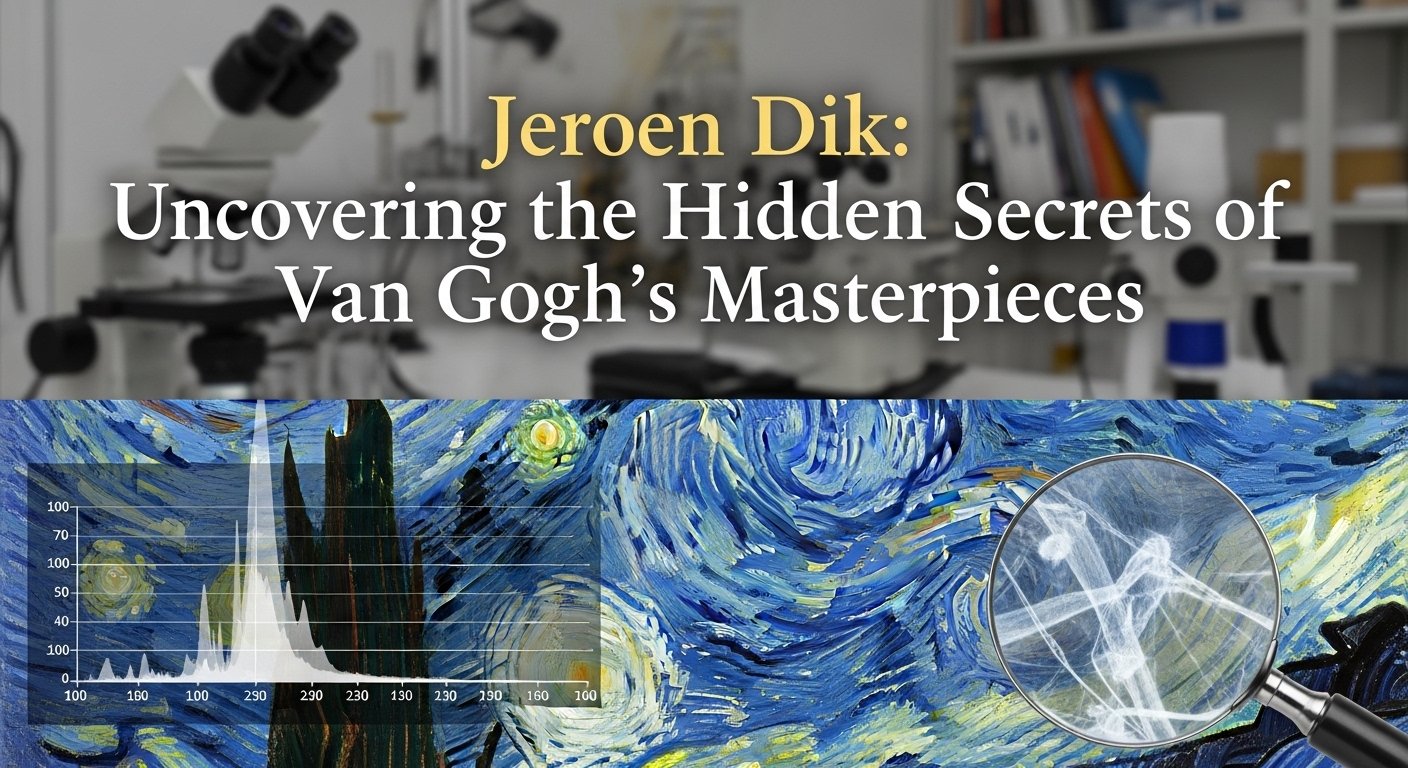
On a quiet morning inside a museum conservation lab, a painting that has been studied for more than a century begins to tell a new story. Layers beneath the visible brushstrokes reveal lines, shapes, and decisions that never reached the public eye. This moment of discovery sits at the heart of the work of Jeroen Dik, a scientist whose research has changed how the world understands Vincent van Gogh and, more broadly, how art history and technology can work together.
For entrepreneurs, technologists, and founders, the story of Jeroen Dik is not just about art. It is about curiosity, interdisciplinary thinking, and the power of applying modern tools to age-old problems. His work shows how innovation often happens at the edges, where disciplines overlap and assumptions are challenged.
From Materials Science to Art Investigation
Jeroen Dik did not begin his career as a traditional art historian. His academic roots are in materials science, a field concerned with understanding how substances behave, age, and interact. That background would later become his greatest strength. Instead of approaching paintings only as cultural objects, Dik examined them as physical systems made of pigments, binders, and layers that respond to time and environment.
This shift in perspective mattered. For decades, art historians relied on visual analysis, written records, and stylistic comparison. While effective, these methods left many questions unanswered. Why did an artist change composition midway through a painting? How did materials affect creative choices? What lies beneath the final image?
By bringing scientific imaging and analytical techniques into museums, Jeroen Dik helped open a new chapter in art research. Paintings could now be studied without damage, revealing their hidden histories.
The Technology Behind Seeing the Invisible
At the center of Dik’s work is the use of advanced imaging technologies. Techniques such as X-ray fluorescence scanning allow researchers to map the chemical elements in a painting. Each pigment contains specific elements, which means earlier sketches and abandoned forms can be detected even when they are covered by later layers of paint.
What makes this approach powerful is its precision. Instead of guessing what might be underneath a surface, researchers can see clear evidence of changes an artist made during the creative process. In the case of Van Gogh, these findings have been particularly striking.
Van Gogh was known for working quickly and reusing canvases, often painting over earlier works due to financial constraints. Dik’s research confirmed this practice in remarkable detail, uncovering portraits beneath landscapes and different compositions hidden below familiar scenes.
Jeroen Dik and the Reframing of Van Gogh
The connection between Jeroen Dik and Vincent van Gogh has captured global attention. Through his work with major museums and research institutions, Dik helped reveal how Van Gogh experimented, struggled, and evolved as an artist.
These discoveries did more than satisfy academic curiosity. They reshaped narratives around Van Gogh’s creativity. Instead of viewing his paintings as spontaneous bursts of genius, Dik’s findings showed a process filled with revision, doubt, and deliberate decision-making.
For modern readers, this reframing feels surprisingly relevant. Innovation is rarely linear. Whether building a startup or developing new technology, progress often involves false starts and hidden layers of effort that never make it into the final product.
Collaboration Between Science and Culture
One of the most important aspects of Dik’s career is collaboration. His work sits at the intersection of scientists, conservators, curators, and historians. Each group brings a different perspective, and none can succeed alone.
Museums, traditionally cautious about invasive research, began to see the value of scientific analysis that preserves the integrity of artworks. At the same time, scientists learned to communicate findings in ways that respect cultural and historical context.
This collaborative model mirrors successful innovation in business and technology. Breakthroughs rarely come from isolated expertise. They emerge when diverse skills are aligned toward a shared goal.
A Closer Look at Key Contributions
To understand the scope of Jeroen Dik’s impact, it helps to look at the areas where his work has left a lasting mark.
| Area of Contribution | Impact on Art and Research |
|---|---|
| Advanced imaging techniques | Enabled non-invasive study of hidden paint layers |
| Van Gogh research | Revealed earlier compositions and creative revisions |
| Museum collaboration | Built trust between scientists and cultural institutions |
| Interdisciplinary education | Inspired new research approaches in conservation science |
This combination of technical skill and cultural sensitivity is rare. It explains why Dik’s work continues to influence how museums and research labs approach historical artifacts.
Lessons for Entrepreneurs and Technologists
Although Jeroen Dik operates in the art world, the lessons from his career resonate far beyond museums. His success highlights the value of applying tools from one domain to problems in another. Many founders build successful companies by spotting these cross-disciplinary opportunities.
Another lesson lies in patience. Dik’s discoveries often take years of careful research, data analysis, and collaboration. In an age obsessed with speed, his work reminds us that depth and rigor still matter.
Finally, there is the importance of storytelling. Data alone does not change perspectives. Dik’s findings gained global attention because they were communicated in a way that connected emotionally with audiences, revealing the human side of a legendary artist.
The Broader Impact on Art History
The influence of Jeroen Dik extends beyond Van Gogh. His methods have encouraged similar studies of other artists and periods. Paintings once considered fully understood are now being reexamined with fresh eyes.
This shift has also affected how museums engage the public. Exhibitions increasingly include insights from scientific analysis, allowing visitors to see art not just as finished masterpieces but as evolving works shaped by process and circumstance.
For cultural institutions facing pressure to remain relevant in a digital age, this blend of science and storytelling offers a powerful path forward.
Challenges and Ethical Considerations
Working at the intersection of technology and art is not without challenges. There are ethical questions about how much intervention is appropriate and how findings should be interpreted. Scientific data can reveal physical facts, but it cannot fully explain artistic intent.
Jeroen Dik has consistently emphasized balance. Technology should support, not overshadow, historical and cultural understanding. This principle has helped maintain trust among museums and scholars, ensuring that innovation enhances rather than diminishes artistic legacy.
Why His Work Matters Today
In a world flooded with information, the ability to uncover hidden meaning has become increasingly valuable. Dik’s work is a reminder that some of the most important insights lie beneath the surface, waiting for the right tools and mindset.
For tech readers and founders, his career offers a compelling example of how deep expertise, when paired with curiosity and collaboration, can transform an entire field.
Conclusion
Jeroen Dik’s journey shows how innovation thrives at the crossroads of disciplines. By combining materials science with art history, he uncovered stories hidden for more than a century and changed how the world understands one of its most celebrated artists.
His work reminds us that progress is often layered, built over time through experimentation, revision, and collaboration. Whether in art, technology, or business, the hidden process matters as much as the final result. In revealing the unseen layers of Van Gogh’s masterpieces, Dik has also revealed something universal about creativity itself.
 Oscar James